Complex Art, Simplified: How to Handle High-End Photorealistic Prints Without the Stress

We’ve all been there. An email pops into your inbox from a potential high-ticket client. You open the attachment, and instead of a simple three-color vector logo, you’re staring at a high-resolution photograph of a snarling tiger, a hyper-detailed movie poster, or a sunset with more gradients than a Pantone book.
Your first instinct? A slight tightening in your chest. You start calculating the hours of manual "color pulling" in Photoshop. You think about the inevitable back-and-forth with the press team when the underbase isn't quite right. You think about the "bottleneck" this job will create in your art department.
In the screen printing world, photorealistic art is often viewed as a double-edged sword. On one side, it’s a high-revenue opportunity that can set your shop apart. On the other, it’s a potential logistical nightmare that can eat your margins alive through wasted time and ruined screens.
But what if you could take the stress out of the equation? What if you could handle the most complex simulated process jobs with the same confidence you have for a simple left-chest print? At InkSplit, we believe complex art shouldn't mean a complex life.
The Intimidation Factor: Why Shops Say "No"
The "Intimidation Factor" is real. Many talented printers turn down photorealistic work or refer it to "specialty shops" because the risk feels higher than the reward.
The primary fear is the bottleneck. In a busy shop, momentum is everything. When a complex file hits the art room, everything else stops. A designer might spend four to six hours manually separating colors, trying to guess which shades of gray will blend perfectly to create that metallic chrome effect. If those separations are off by even a fraction, the press operator will spend hours on a "set-and-see" loop: flashing, wiping, re-burning, and starting over.
When you turn down these jobs, you aren't just losing one invoice; you’re losing the chance to be the "hero shop" that can do what others can't. You’re leaving high-margin work on the table because the manual process is just too heavy to lift.
Precision Without the Struggle
For decades, the industry standard for high-end separations involved having a "Photoshop Wizard" on staff: someone who had spent twenty years mastering the art of channel separations. These experts are rare and expensive.
The struggle usually involves manually selecting color ranges, creating custom spot channels, and meticulously adjusting levels to ensure the halftones don't turn into a muddy mess on the garment. It’s a craft, but it’s a slow one.
InkSplit changes that narrative. We’ve built an engine that brings precision without the struggle. You don’t need twenty years of manual color-pulling experience to get a professional result. Our color separation technology handles the math and the color theory for you, identifying the optimal ink channels to recreate even the most difficult photorealistic images.

Simulated Process Made Easy
"Simulated Process" is the magic word in high-end apparel. It’s the method of using a limited palette of opaque inks to create a full range of colors through halftones and blending. It’s how you get that retail-ready, soft-hand feel on a black t-shirt while keeping the image looking like a photograph.
Traditionally, this was the hardest thing to automate. Plugins were clunky, often requiring specific versions of software and expensive licenses. InkSplit has moved this entire process to the cloud.
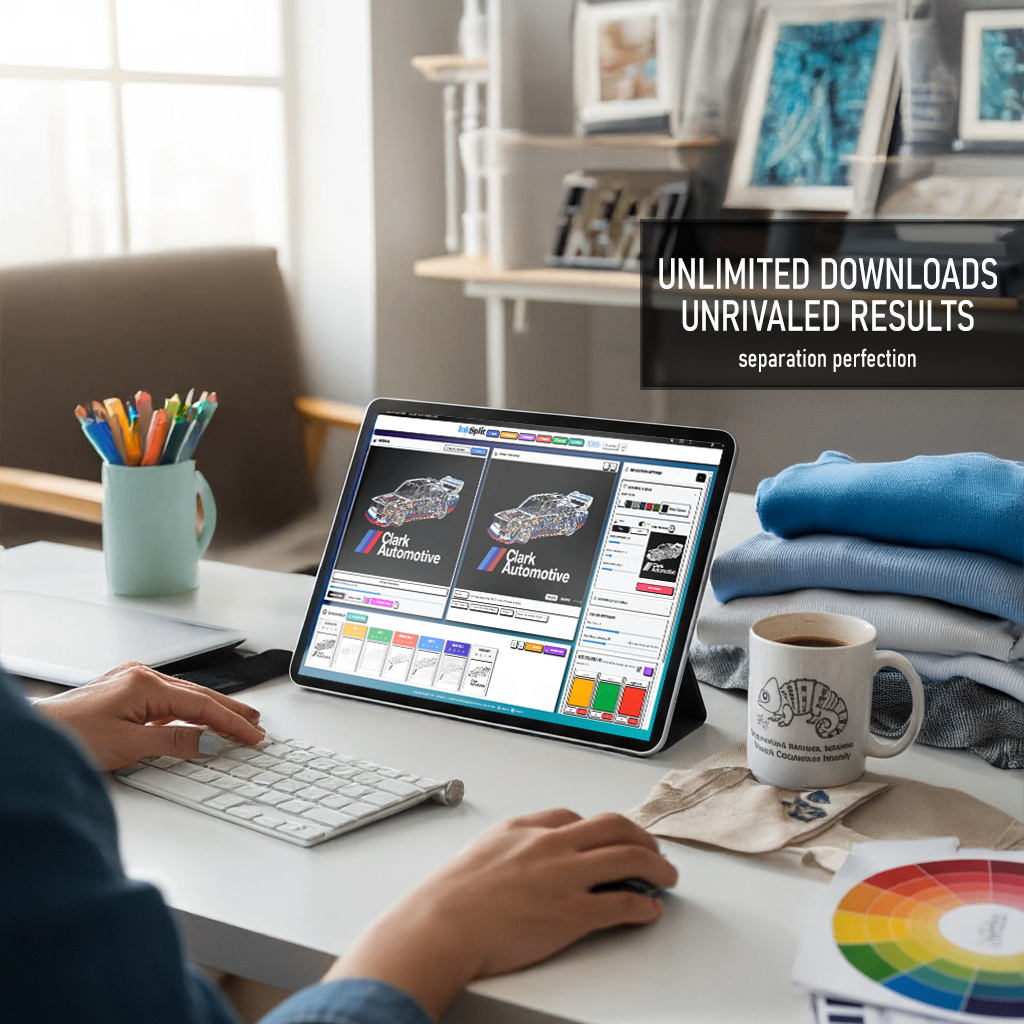
With InkSplit, you upload your artwork, and within minutes, the AI-driven engine performs a full simulated process separation. It calculates the underbase, selects the best Pantone matches, and gives you a set of channels that are ready to burn. What used to take half a day now takes less time than brewing a pot of coffee. By automating the heavy lifting, you remove the human error that leads to "muddy" prints and wasted screens.
The Power of the Live Preview
One of the biggest stress points in screen printing is the "press-side surprise." You’ve burned the screens, taped them up, loaded the ink, and printed the first sample: only to realize the red is overpowering the yellow, or the highlight white is too thick.
This is where InkSplit’s Live Preview feature becomes your best friend.

Before you ever touch a squeegee, you can see exactly how the ink will lay down. You can toggle the garment color to see how the design looks on a Black, Navy, or Charcoal Heather shirt. You can adjust the "choke" on the underbase and see the results in real-time. This level of accuracy means you can show the client exactly what to expect, or you can catch a potential issue while it’s still just pixels on a screen.
The live preview doesn’t just show the art; it simulates the print. It accounts for the way colors interact and how the underbase supports the top colors. It’s the ultimate "peace of mind" tool for any shop owner. Explore more of these features here.
Consistency: From the First Shirt to the 500th
Handling a complex print is one thing; maintaining that quality across a high-volume run is another. When you have a design with ten different colors and intricate halftones, even a small shift in ink viscosity or pressure can change the look of the final product.
Because InkSplit provides precise, mathematically-derived separations, the prints are inherently more stable. When your halftones are calculated correctly and your underbase is solid, the press has an easier time maintaining the "sweet spot."

Whether you’re running a manual press or a 12-color automatic, having clean separations is the foundation of consistency. It ensures that the portrait on the 500th shirt looks just as crisp and vibrant as the very first one off the dryer. This reliability is what builds trust with high-end clients who demand perfection every single time.
A Competitive Advantage for Your Shop
The screen printing market is crowded. To win, you have to offer something the guy down the street can't. If everyone is fighting over 1-color "spirit wear" orders, the margins stay low.
But when you position your shop as a master of photorealistic, high-end prints, you enter a different league. You become the go-to partner for streetwear brands, concert merchandise, and corporate clients with sophisticated brand guidelines.
By using InkSplit to handle these complex jobs, you’re effectively lowering your overhead on the hardest work you do. You’re turning "stressful" jobs into "routine" jobs. This efficiency allows you to price competitively while still enjoying higher margins than your competitors who are still struggling with manual separations.
You can check out how we stack up against traditional methods on our comparison page.
Stop Turning Down Complex Art
The "stress" of photorealistic printing usually comes from the unknown. We fear what we can't easily control. By using automated, AI-powered separations, you take control of the variables. You eliminate the guesswork in the art department, the frustration on the press floor, and the anxiety of the "first print" reveal.
It’s time to stop saying "No" to the art you think is too difficult. Whether it’s a hyper-detailed illustration or a high-resolution photo, you have the tools to make it happen.
Ready to see how simple complex art can be? Stop the manual struggle and start mastering every job with InkSplit’s automated precision.
Check out our pricing plans and start your first separation today.
If you have questions about a specific project or want to see a demo, don't hesitate to contact us. We’re here to help you scale your shop without the stress.
Comments